
Livingston VINE Coverage
Louisiana’s official program is the Louisiana Victims Notification Network, usually called LAVINE. The Louisiana Commission on Law Enforcement says LAVINE monitors adult inmates in all parish jails and state prisons. That scope supports a specific-person check for an adult reported by Livingston Parish Detention Center and for a person in Louisiana DPS&C custody. The program works with Louisiana sheriffs, district attorneys, and DPS&C.
Coverage does not merge the records. A person may be physically housed in a parish building while serving a state sentence, so the reporting agency and legal custodian still matter. LAVINE can reflect a release from jail or a transfer to another facility as separate custody changes. Open the individual result and read which agency reported the event. If the event affects a Livingston booking, LPSO’s movement record is the best source for the exact local departure. For a state sentence, DPS&C records control the discharge or supervision status.
Search Livingston VINE Records
Begin at Louisiana’s official entry rather than a broad search result. Have the full legal name ready. A DPS&C number, date of birth, or other identifier helps separate people with the same name. A local jail inquiry and a state-prison inquiry can represent different custody episodes, even when both concern the same person. The goal is to match the correct person, facility, and agency before relying on the status wording.
- Open the official Louisiana LAVINE program page and follow its offender-search route, or use the state VINE entry.
- Confirm that Louisiana is selected. Choose the offender custody search if the interface offers more than one record type.
- Enter the person’s name. Add an available identifier, and use date-of-birth details where the official channel permits them.
- Compare every returned match. Check the reporting agency, facility, offender number, and age or birth details when shown.
- Open the individual record. Confirm Livingston Parish Detention Center or the correct DPS&C agency before interpreting the event.
- Read “release,” “transfer,” and other custody wording as separate results. If no record appears, use telephone and agency records rather than declaring release.
The successful manifest capture comes from the Louisiana VINE search entry.
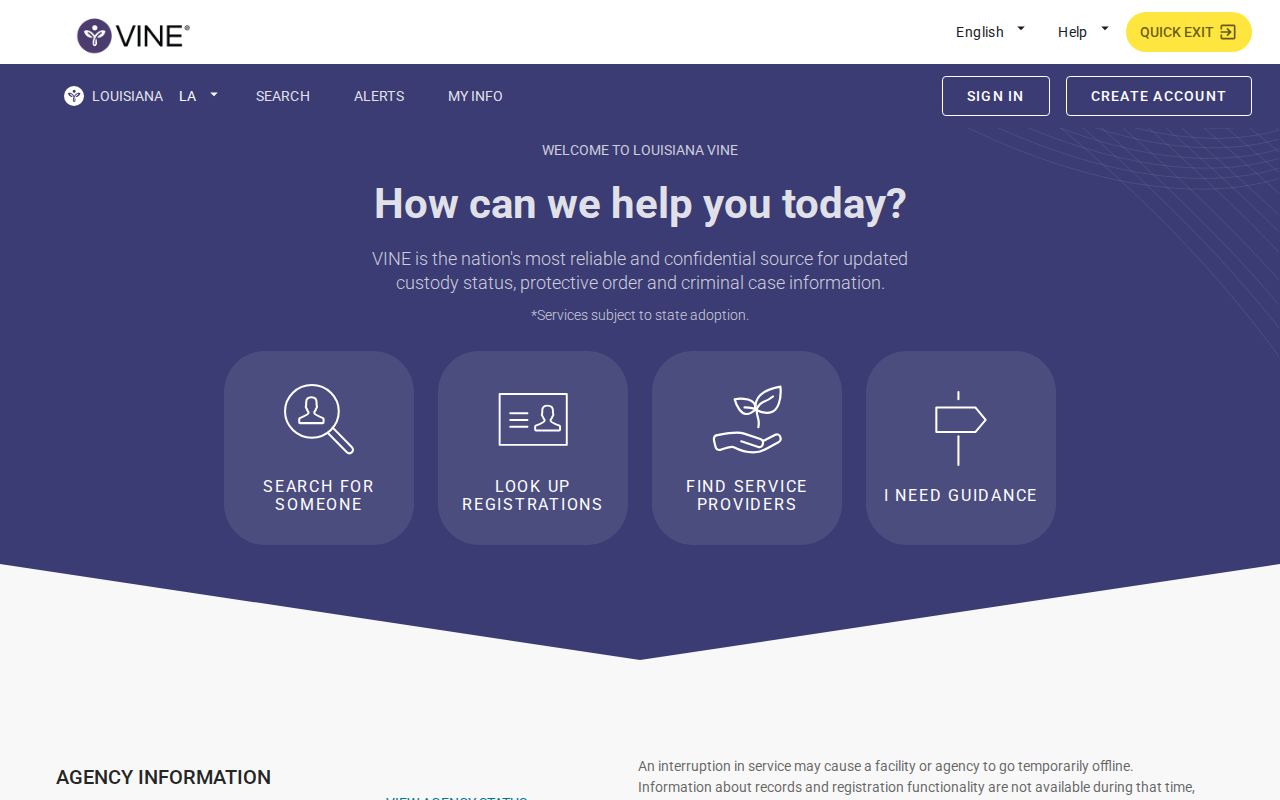
The capture documents the state entry point. Dynamic results can change, so no exact Livingston released-result label or permanent result URL should be promised from the landing screen.
For a full search across local, state, and federal custody, the Livingston Parish released-inmate lookup explains when to leave VINE and use another custodian.
Livingston VINE Result Fields
Louisiana’s official program confirms one-person status inquiry and monitored changes such as release from jail or transfer. It does not publish a stable public data dictionary for every field in a released-person result. A live record may contain identifiers, agency or facility information, current custody wording, and notification controls, but field availability depends on the supplying agency. Exact labels, photos, release reasons, destinations, and retention should be described only after they appear in the real record.
| Result element | Safe use |
|---|---|
| Name and offender identifier | Use them to distinguish matches, not name alone. |
| Reporting agency or facility | Shows which custody episode the result concerns. |
| Custody status or event | Read the displayed wording literally and preserve it. |
| Release event | Supports that the reporting agency ended that custody state; confirm type and date. |
| Transfer event | Means the person moved and remained in custody elsewhere. |
| Notification control | Registers available alerts for that person’s record. |
A scheduled or possible release date is not the same as an actual release. DPS&C’s official phone information can provide a projected date when applicable, but that estimate may change. VINE notice should be paired with the sheriff, DPS&C, or court document when the exact legal event matters.
- Custody event
- A reported change such as release or transfer. Its wording identifies what the reporting agency says happened.
- Projected date
- An estimate based on the current sentence calculation. It is not proof that departure occurred.
- Release
- The end of custody for the reporting agency, which may still be followed by another custody or supervision status.
- Discharge
- The end of the relevant sentence or legal custody term, which is narrower than simply leaving one facility.
Register Livingston VINE Alerts
Registration starts from the correctly matched individual record. Louisiana materials support phone and email registration. Current VINE product guidance also describes other channels, but availability must be checked on the Louisiana record rather than assumed. The telephone status service remains an expressly anonymous route for inquiry, while the current web product may ask users to create or sign into an account for saved online registrations.
- Search for and positively match the person before choosing any notification option.
- Select the register or notification control attached to that individual record.
- Choose the phone or email methods actually offered and provide contact details the registrant controls.
- For voice calls, create the requested four-digit PIN. It confirms receipt and is not the offender’s ID.
- Complete the confirmation step. Follow any email verification prompt shown by the live Louisiana interface.
- When a call arrives, listen to the event and enter the PIN when prompted. Save the event wording and reporting agency.
- Update the registration if contact details change, and call Louisiana LAVINE for help when needed.
Louisiana’s LAVINE line is 866-528-6748. The service can be used for status inquiry and registration. Automated notice should not be the only safety plan because data comes from participating agencies and can be delayed or corrected.
The general VINE state-selection source is also preserved in a successful capture.
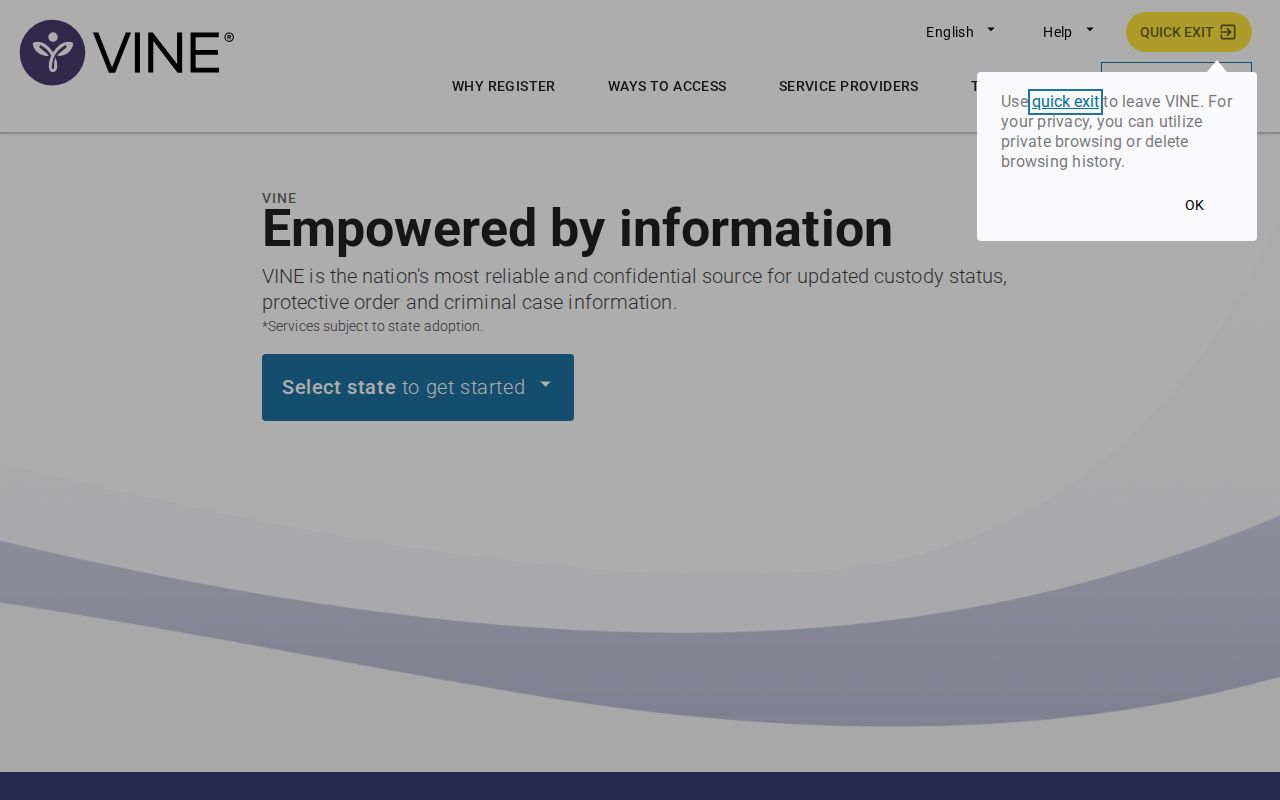
The state selector helps route the search to Louisiana. It does not establish which Livingston agency supplied an individual result, so that check still belongs inside the record.
Note: Keep the four-digit call PIN private and separate from every jail or DPS&C identifier.
Livingston Parish LAVNS Layer
Livingston has a parish-specific LAVNS domain in addition to the statewide VINE route. The local page is branded for the Livingston Parish Sheriff’s Detention Center, names the sheriff, shows an alphabet filter and offender count, and displays a Central Time “Last updated” stamp. Its instructions provide an offender-specific image or control for anonymous registration when that person’s custody status changes.
The local page also carries a critical limitation. It warns that its roster should not be considered or used as an official public document. That makes the interface valuable for current discovery and alerts, but not a certified release source. It does not publish a guaranteed alert time, archive window, released-result retention period, or enough public instructions to promise a particular local PIN or email screen.
Use the parish page while a person is listed. If a custody-change notice arrives, record the event and contact LPSO at (225) 686-2241. For documentary proof, request the booking/release or jail-movement record by mail. A transfer alert means a new custodian should be checked; it does not mean entry into the community.
Statewide Livingston LAVINE Coverage
The statewide layer reaches beyond the parish roster because Louisiana officially describes LAVINE as monitoring adults in all parish jails and state prisons. That is useful when a person moves from Livingston Parish Detention Center to a DPS&C setting. The user can follow a custody event even when a current local roster no longer returns the person, as long as the supplying agencies report the transition through the program.
Statewide reach still has boundaries. Louisiana publishes no stable result-field dictionary, Livingston-specific feed cadence, notification latency, or permanent former-record retention promise. Absence can result from spelling, identifier mismatch, a change in legal custody, data timing, or a person never being in the selected system. Call the Louisiana line, then contact the correct custodian. DPS&C’s public information phone is 225-383-4580 for facility assignment and projected release information when applicable.
| Custody | Correct VINE role | Final confirmation |
|---|---|---|
| Livingston parish booking | Local or statewide Louisiana alert/status check. | LPSO release or movement record and court disposition. |
| Louisiana state sentence | Statewide LAVINE and DPS&C status path. | DPS&C computation, release, or discharge record. |
| Federal BOP custody | Not covered by Louisiana VINE. | BOP locator and federal court record. |
| ICE detention | Not a Louisiana VINE release archive. | ICE current locator, ERO, and release paperwork. |
| USMS pretrial custody | No public VINE history substitutes for the federal case. | Federal docket and appropriate USMS records request. |
Livingston LAVO Notice Distinction
Louisiana Victim Outreach, or LAVO, is a separate DPS&C registration layer. It is not merely another name for the public LAVINE search. DPS&C encourages eligible direct victims and officially designated people to complete its formal process for a person under state corrections authority. The agency lists notices that can include initial facility placement, projected dates, rulings that affect sentence length, parole or pardon hearings, escape and apprehension, assignment to a Transitional Work Program, and release from prison by any means.
That formal service has an eligibility and registration process. General LAVINE status inquiry and custody alerts remain the broad public route. Someone who qualifies for formal state-prison notices should use the DPS&C program rather than assume a saved VINE alert creates statutory registration. Louisiana’s victim-notification law supplies additional notice duties for registered people at specified events. The two services can complement each other, but they serve different roles.
The successful page-matched image comes from the DPS&C victim-services source.
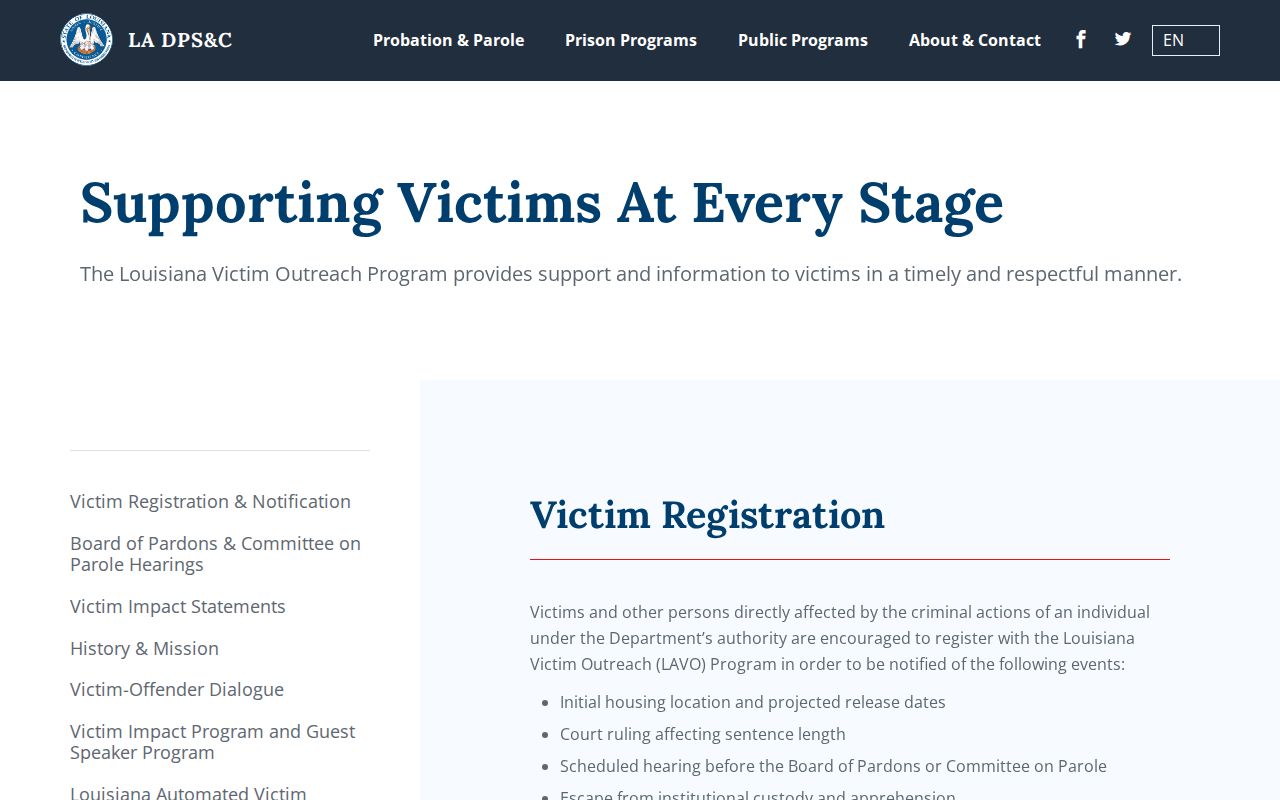
The capture documents the formal DPS&C layer and its state-prison notice role. It should not be presented as Livingston Parish’s current roster or as open registration for every user.
Confirm Livingston VINE Releases
A VINE event should begin the confirmation step, not end it. For a Livingston Parish booking, ask LPSO whether the event was community release, transfer, or pickup by another authority. Request the actual release or movement record if the time, reason, releasing authority, or destination is needed. The 21st Judicial District Court record may explain a bond order, dismissal, sentence, credit for time served, probation result, or other legal action.
For state custody, use DPS&C and the Amite supervision office when post-release status is relevant. For federal sentenced custody, use BOP instead of VINE. BOP can show the end of BOP custody, but another jurisdiction or supervised release may follow. ICE’s locator is current-only, so no result there is inconclusive. These boundaries prevent a single notification from being stretched across several unrelated custody systems.
Finally, do not treat a roster disappearance as release. Local LAVNS is not an official document, statewide LAVINE has no guaranteed former-record archive, and each participating source depends on agency reporting. Preserve the result, identify the custodian, and get the underlying record.
Note: Urgent danger requires direct emergency help; automated custody alerts should never be the only safety measure.